by Cathy Baker | Faith |
Anticipation is a beautiful thing—especially when expressed through the laughter of a child.
Last night, during one of Piper’s giggle-fests, I noticed that her favorite part of our exchange came in those few moments between giggles, just before I repeated a goofy voice, one created purely for her entertainment.
Although she wasn’t certain of my next move, she sat completely still, wide-eyed, and primed for pure delight. Oh, the anticipation!
Being aware of something – or someone – is part of anticipating, but the second part of the definition states that because of this awareness, action is taken in order to be prepared. Expectation in motion, wouldn’t you say?
The delightful anticipation I caught on my granddaughter’s face last night is the same anticipation I want my heavenly Father to find on mine as I wait in expectation of His next move, fully prepared for action, trusting in its good.
As it is my eager expectation and hope that I will not be at all
ashamed, but that with full courage now as always Christ will be honored
in my body, whether by life or by death. Philippians 1:20 ESV
by Cathy Baker | Faith |
Welcome to Sunday Snippets!
Kyle Estepp led today’s topic in Galatians 5 on the Fruit of the Spirit. He brought a fresh perspective to one of the most studied passages of Scripture. To enjoy the sermon in its entirety, please visit Summit Church’s sermon archive.
A few favorite quotes from today:
- It is fruit of the Spirit, not fruits. We can’t have one without the other. Unless we’re growing in all of them (to differing degrees) we are not growing in any of them.
- We’re only as mature as our weakest character trait.
- Practically speaking, spiritual fruit is grown only through intentional biblical community.
Kyle also listed specific definitions, but my fingers couldn’t keep up. Below is a similar list from Timothy Keller, along with opposite and counterfeit traits.
Agape – love
Definition – To serve a person for their good and intrinsic value, not for what the person brings you.
Opposite – Fear: self-protection and abusing people.
Counterfeit – Selfish affection.
Rescuing someone but really rescuing self. Attracted not to a person,
but to how this person’s love makes you feel about yourself.
Chara – joy
Definition – Delight in God and his salvation for sheer beauty and worth of who he is.
Opposite – Hopelessness, despair.
Counterfeit – Elation that comes with blessings not the Blesser! Mood swings based on circumstances.
Irene – peace
Definition – Confidence and rest in the wisdom and sovereignty of God more than your own.
Opposite – Anxiety and worry
Counterfeit – Indifference, apathy, not caring about something. “I don’t care.”
Makrothumia – patience
Definition – Ability to take trouble (from others or life) without blowing. To suffer joyfully.
Opposite – Resentment toward God and others.
Counterfeit – Cynicism. Self-righteousness. “This is too small to be bothered about.”
Chrestotes – kindness
Definition – Practical kindness with vulnerability out of deep inner security.
Opposite – Envy. Unable to rejoice other’s joy.
Counterfeit – Manipulative good deeds. “Right hand knowing what left hand is doing.” Self-congratulation and self-righteousness.
Agathosune – goodness. (integrity)
Definition – Honesty, transparency. Being the same in one situation as another.
Opposite – Phoniness; hypocrisy.
Counterfeit – Truth without love. “Getting it off the chest” for your sake.
Pistis – faithfulness.
Definition – Loyalty. Courage. To be principle-driven, committed, utterly reliable. True to one’s word.
Opposite – Opportunist. Fair-weather friend.
Counterfeit – Love without truth. Being loyal when you should be willing to confront or challenge.
Prautas – gentleness. (humility)
Definition – Self-forgetfulness.
Opposite – Superiority: self-absorbed self-aggrandizement.
Counterfeit – Inferiority: self-absorbed, self-consciousness.
Egkrateia – self-control
Definition – Ability to choose the important thing over the urgent.
Opposite – A driven, impulsive, uncontrolled person.
Counterfeit – Willpower through pride or through more “functional” idols.
by Cathy Baker | Faith |
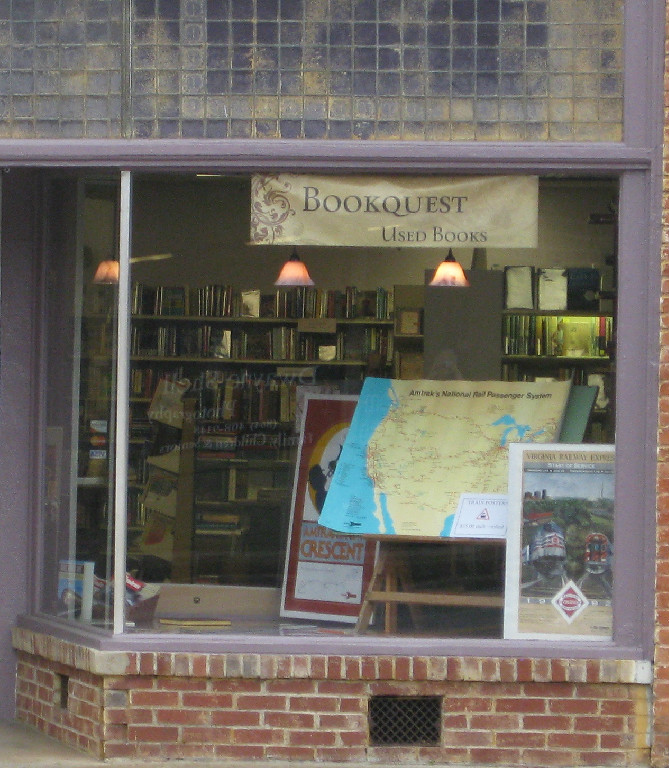
Wafting aroma of well-worn books greeted me like an old friend when I recently stumbled into BookQuest, a local jewel but mere miles from my home. The only thing missing from my Christmas in July experience
was Bing Crosby playing in the background.
I marveled at the multitude of shelves filled with used and rare books, many with seasoned autographs inscribed on their flyleaves.
Among my finds that day…a book by a local poet, Bernard Meredith, a late 1800’s poetry book by George Eliot, and a petite paper-bound book of beautifully illustrated poems that may just end up framed on my wall.
BookQuest is located in downtown area of Fountain Inn, SC. If you live nearby, I encourage you to stop by and support this local find — but if you live a little too far away to enjoy this bookstore, be sure to explore a nearby town in search of your own jewel.
by Cathy Baker | Faith |
Today, I’m excited to introduce you to friend Marcia Moston, author of Call of a Coward: The God of Moses and the Middle-Class Housewife. We’re in for a treat as we learn more about Marcia and her amazing journey.
Tell us about yourself.
Although I hold degrees in sociology and Christian education, most of what I’ve learned has been by the proverbial seat of my pants. I’ve taught English in a Christian high school, worked with orphans in a Mayan village, led mission teams to Central America, delivered Yellowbooks, stuffed vending machines, and lived in everything from tepees to parsonages.
Your writing experience is unusual in that until 2008, you’d never written anything, but by 2011 you had a book contract with Thomas Nelson. How did that happen?
I am grateful to have experienced such abundant grace and blessing on my work. When we moved to the South a few years ago, I had a singular image in my mind: buy a house with a pool where I could sit and write. Although I didn’t know what I would write, nor did I know how to write a book, it was as though my story’s time had come, and I needed a nesting spot. II took a writing workshop taught by the editor of the city journal. At the end of the class, she offered me my own weekly column. That’s when I realized I could write something that people would read.
I continued to take workshops and go to conferences. In 2010, my manuscript won at the Blue Ridge Christian Writers Conference. I also won a self-publishing package, but turned it down because I felt constrained to wait.
Later in the year, I entered the Women of Faith Writing Contest and won a self-publishing package from WestBow Press. Unbeknownst to me, Thomas Nelson was looking at my book, and a month after it came out, offered me a contract.
Many traditional publishers avoid memoir. Do you have any advice for someone who hopes to publish a memoir?
The first agent I approached told me no one would publish a memoir from an unknown. He suggested I turn my story into magazine articles. Although I didn’t do it at the time, I think his advice is good. Memoirists need the exposure magazines give.
My path to publication, however, was through contests. I also made sure my story was about something more than me. Thomas Nelson must have agreed because they categorized my book as Christian living/spirituality.
Tell us about Call of a Coward-the God of Moses and the Middle-Class Housewife.
It’s
about laying aside your hopes, dreams, and fears to follow God even
though where He’s leading seems to require credentials you lack and
courage you don’t think you have. And about discovering just how
personal and gracious He is. Here’s an excerpt:
The
road
exceeded my worst expectations. Cliffs rose straight up on one side and
plunged straight down on the other. The dusty, rutted trail
between the two was wide enough for one vehicle. It was one
thing to ride a scary road with a husband you could yell
at; it was another to ride a scarier road with a stranger who said with
the same equanimity. “There’s a good view from the overlook
up ahead,” and “The brakes are bad, that’s why I have to
pump them.”
Hernando downshifted, pumped the screeching brakes and entered the
river. I couldn’t decide whether to look ahead at the
slippery rocks on the steep bank, look behind from where we
had safely come, or simply bury my head in my lap. If I needed a sign
from God, this was it. I decided there was no way I could
ride this road to go shopping, to get our mail, to find a
doctor, to do anything─ever. When, and if, I met up with Bob in the village, I was going to have to tell him so.
Permission
link: Excerpted from Call of a Coward: The God of Moses and the Middle
Class House-Wife. Thomas Nelson ©2012. Used by permission of Thomas
Nelson, Inc. www.thomasnelson.com.
How were you personally impacted working on the project?
Recording
events and later rewriting them helped me to see just how involved God
was (and is!) in my journey. I gained a deeper appreciation of his
grace, and then after the manuscript won several contests, including the Women of Faith writing contest, I realized it was a message bigger than
my personal story.
What do you hope readers will glean from your story, Call of a Coward: The God of Moses and the Middle-Class Housewife?
A fresh confidence in the Living One who sees them. A sense of expectancy in encountering him. Both the story and its path to publication are examples of the possibilities of an ordinary life in the hands of an extraordinary God. I hope readers will be inspired and encouraged that whether they travel a thousand miles or a thousand feet, God can do exceedingly more than they imagine.
What advice have you found helpful to you as a writer?
To do my part—learn the craft, be open for critique, write with guts, and then rest in Flannery O’Connor’s advice: “When a book leaves your hands, it belongs to God. He may use it to save a few souls or to try a few others, but I think that for the writer to worry is to take over God’s business.”
What or who has influenced you?
I’m sure influences from thousands of books are floating around my brain, but most recently, I’ve been inspired by the imagery and metaphors of the Bible, the essays of E.B. White and Annie Dillard, and the stories of Rick Bragg—people who capture the extraordinary in the ordinary.
Are you working on a second book?
Yes.
My working title is Going South-the God of my Mistakes. When we moved
south, we didn’t expect our plans to go south too—but it’s really a
story of hope.
Is there anything else you would like readers to know?
It was with fear and trembling that I put my name on the same line as Moses’, but the story is not about me or Moses; it’s about the God who is the same yesterday, today, and forever.
Call of a Coward: The God of Moses and the Middle-Class Housewife is available online at Amazon, Barnes and Noble, Christian Book Distributors or from your neighborhood bookstore.

Visit me at http://marciamoston.com
I’m a tremendous fan of Marcia’s. She’s the real deal — an authentic and dynamic Christ follower. I encourage you to pick up a copy of her book and then would you consider leaving a comment on Amazon or other distributors, sharing your honest opinion of Call of a Coward: The God of Moses and the Middle-Class Housewife?
Enjoy!
by Cathy Baker | Faith |
Some of my favorite family pics of the week…
Piper, wondering how many more pics her Grammy will take of her in one evening.
Piper at the Red, White, and Blue 5K on July 4th cheering on her
Mommy, Daddy, and Pappa
Piper with her other sweet Grandma
Brian blazing by in blue!
Zach and Sarah heading towards the finish line (far right)
Cutest. Baby. Ever. In Red, White, and Blue.
by Cathy Baker | Faith |
Welcome to Sunday Snippets!
Jason Malone brought a timely message from Galatians 5:1-15 this morning. As with all Snippets, I try to jot down everything
verbatim, but it’s not always possible.To listen to the sermon in its
entirety, I invite you to visit Summit’s site.
As we know, Galatians was written to Christ followers, reminding them that anything added to the Gospel of Jesus Christ results in slavery.
- Some confuse the Gospel for spiritual milk, believing it to be a necessity for new Christ followers only, but we never outgrow the Gospel. It’s just as critical for new followers as those who’ve walked with Christ for many years. We never “move on” from the Gospel.
- Only one leads to true freedom: Gospel transformation (motivated by love) and moral reformation (behavior modification).
- The “why” of our obedience is everything, as is seen in Charles Spurgeon’s The Tale of the King, the Carrot, and the Horse:
Once
upon a time there was a gardener who grew an enormous carrot. He took
it to his king and said, “My lord, this is the greatest carrot I’ve ever
grown or ever will grow; therefore, I want to present it to you as a
token of my love and respect for you.” The king was touched and
discerned the man’s heart, so as he turned to go, the king said, “Wait!
You are clearly a good steward of the earth. I own a plot of land right
next to yours. I want to give it to you freely as a gift, so you can
garden it all.” The gardener was amazed and delighted and went home
rejoicing.
But
there was a nobleman at the king’s court who overheard all this, and he
said, “My! If that is what you get for a carrot, what if you gave the
king something better?” The next day the nobleman came before the king,
and he was leading a handsome black stallion. He bowed low and said, “My
lord, I breed horses, and this is the greatest horse I’ve ever bred or
ever will; therefore, I want to present it to you as a token of my love
and respect for you.” But the king discerned his heart and said, “Thank
you,” and took the horse and simply dismissed him. The nobleman was
perplexed, so the king said, “Let me explain. That gardener was giving
me the carrot, but you were giving yourself the horse.
- If we are clothing the poor, feeding the hungry, attending church, or anything else to gain more love, favor, or blessings from the Lord, then we are doing these things for ourselves, not Christ.
- Anytime we catch ourselves doing something good, pause for a moment and ask: Did I do that so Christ will love me or because He loves me?
Today’s snippets don’t begin to do Jason’s sermon justice. It was superb teaching on true freedom in Christ—so much so that I often found myself listening more and writing less. I encourage you to visit the link above and listen to it in its entirety.
Additional reference: Mere C.S. Lewis